When argument reaches its edge
Some disagreements run deeper than any single claim at issue. When interlocutors share no common ground — no agreed methods, principles, or starting points — the ordinary machinery of argumentation seems to stall. What, then, can reasoned exchange still accomplish?
This one-day symposium brings deep disagreement into focus from the perspective of contemporary argumentation theory, epistemology, and ethics. Rather than treating deep disagreement merely as a problem about hinges, it asks how meta-argumentation, the virtues of the arguer, and the pragmatics of reasoned exchange bear on the apparent limits of argument — and whether those limits are as firm as they look.
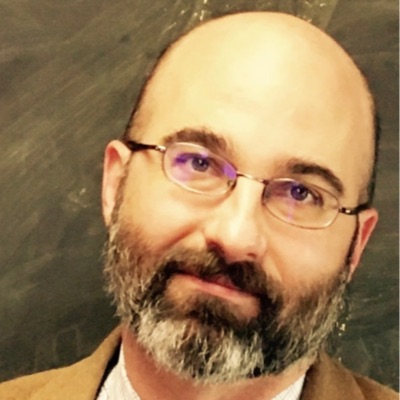
Scott F. Aikin
Scott Aikin is Associate Professor of Philosophy at Vanderbilt University. His research moves across the theory of knowledge, informal logic, ancient philosophy, and the philosophy of religion, held together by a pragmatist conception of argument as a shared rational practice.
He is the author and co-author of numerous books, including Why We Argue (And How We Should), Political Argument in a Polarized Age (with Robert B. Talisse), and Epistemology and the Regress Problem. His sustained work on deep disagreement — from Dialecticality and Deep Disagreement to Deep Disagreement and the Problem of the Criterion — examines what becomes of argumentative norms precisely where the conditions for fruitful exchange fail to hold.
The full programme
Eleven talks across one day: the keynote, followed by ten papers from invited contributors and from the open call. Each paper has 20 minutes for presentation and 10 for discussion.
Download the book of abstracts (PDF) — titles and abstracts of all contributions, in the order of the programme.
Details
Klemensova 19, Bratislava
Scott F. Aikin (Vanderbilt University)
Bratislava
The symposium takes place in the Study Room of the Central Library of the Slovak Academy of Sciences, Klemensova 19, in the centre of Bratislava — a compact city in the heart of Central Europe, easily reached from Vienna and Budapest.
Most international visitors arrive via Vienna Airport (VIE), connected to Bratislava by direct bus in about an hour. Bratislava also has its own airport (BTS), served mainly by low-cost carriers.
Central Library of the Slovak Academy of Sciences — Klemensova 19, 814 67 Bratislava, Slovak Republic · open in Google Maps · street view
From Vienna
REX regional trains run roughly twice an hour and reach Bratislava in about an hour. Frequent buses (FlixBus and others) connect both Vienna city centre and Vienna Airport with Bratislava in around 1–1½ hours — the airport is the most convenient gateway by air.
From Budapest
Direct trains run several times a day and take about 2½ hours. Hourly buses (FlixBus, RegioJet) cover the route in a similar time, often at a lower fare.
For things to see and do, the official city guide visitbratislava.com is a good starting point. The historic Old Town is within easy walking distance of the venue; as October is a busy season, early booking is advisable. For accommodation, hotels within a short walk of the venue include Danubia Gate, Hotel Avance, Hotel Devín and Radisson Blu Carlton; the city's accommodation guide and platforms such as Booking.com list further options.
Topoi — call for papers
A special issue of Topoi, Deep Disagreement and the Limits of Argumentation, is in preparation. It gathers work in argumentation theory, social epistemology and political philosophy on deep disagreement, and on what becomes of the norms of argumentation at the point where argument seems to run out. Guest editors: Tomáš Kollárik (Institute of Philosophy, SAS) and Scott F. Aikin (Vanderbilt University).
The call is open to everyone, not only to participants of the symposium. Papers of up to 7,000 words (including references) are invited by 15 February 2027 and are submitted through the journal's own platform; the collection page has the full call and the submission details.